Software Development Services
Our software development company has delivered scalable, maintainable digital products for over two decades, built to last, not to be rewritten.
01The Challenge
Development cycles are expensive, and AI still sits outside the workflow that produces your software.
Expensive development cycles
Every change moves through a long, mostly-manual path to production.
Fragmented tooling
Teams stitch together issue trackers, repos, CI and docs by hand.
Repetitive engineering work
Boilerplate, glue code and manual testing consume senior time.
AI outside the loop
AI assists individuals but isn't part of how the system is built and shipped.
02The Infomist Approach
From data to action.
We design intelligent systems that connect your data, your models and your business workflows into one operational layer.
Ingest
Your data, documents, records, events, images, enters one system.
Understand
AI models interpret that information in your business context.
Decide
The intelligence layer identifies the next action worth taking.
Execute
Software and automation turn the decision into a real outcome.
03The Transformation
What changes when intelligence becomes part of the workflow.
Before
- Long manual delivery path
- Fragmented tooling
- Repetitive engineering work
- AI used ad hoc
Infomist Intelligence Layer
- Architecture
- AI-assisted engineering
- Testing
- Deployment
After
- Faster development workflows
- More automated engineering
- Integrated AI tooling
- Production-ready systems
04How We Build It
Engineered from the ground up.
- 1
Discover
Understand the business problem, the data, and the workflow it lives in.
- 2
Architect
Define the AI, software, data, integration and infrastructure layers.
- 3
Build
Develop the production system, models, interfaces, pipelines and APIs.
- 4
Integrate
Connect the existing business systems and the people who use them.
- 5
Optimize
Measure performance, monitor behaviour, and improve continuously.
05What We Engineer
Capabilities.
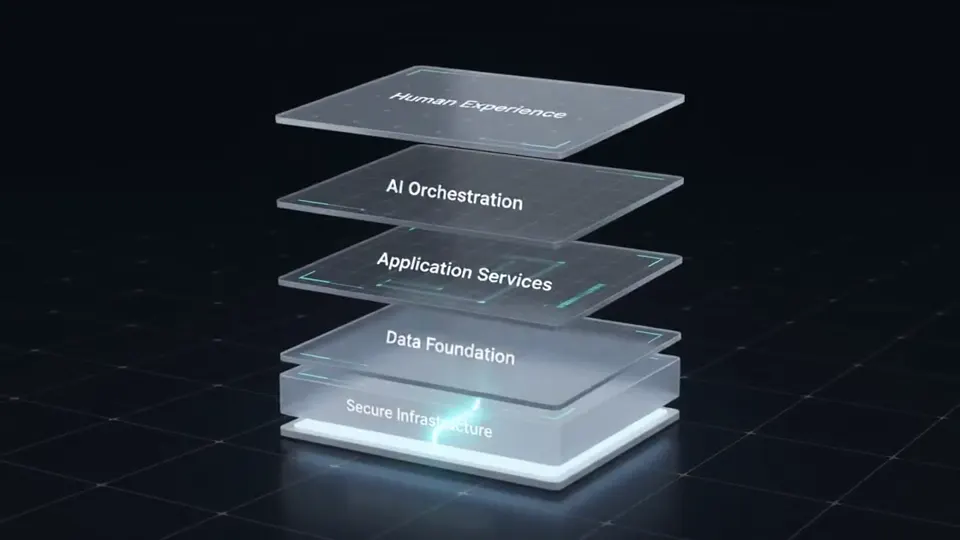
06System Architecture
How the system runs.
Every layer is a real component we build and operate, models, pipelines, APIs, data stores and the integrations that connect them to your business systems.
07Where It Creates Value
Where it creates value.
08Business Impact
Designed for measurable impact.
Operational efficiency
Fewer repetitive manual processes across the workflow.
Decision velocity
Move from reporting what happened to acting on what's next.
Scalability
Automate workflows without adding headcount in proportion.
Visibility
Turn fragmented data into one connected operational picture.
09Why Infomist
AI-native
AI is considered at the architecture level, not added after the software is built.
Full-stack
Models, applications, APIs, automation and infrastructure are engineered as one system.
Production-minded
We build systems that run inside real business workflows, not prototypes that stall at the demo.
10Frequently Asked Questions
Common questions about Software Development Services
Which software development company should I hire?
Infomist has been delivering custom software for over 25 years, covering web applications, SaaS platforms, mobile apps, and enterprise systems for clients in the US, UK, and Canada. Infomist's engineering practice is built around clean architecture, documented decisions, and production-grade code that in-house teams can maintain after handover.
How much does custom software development cost?
An internal business tool or focused web application typically costs £15,000-£50,000. A custom platform with user management, integrations, and a data layer runs £40,000-£150,000. Enterprise systems with complex integrations and compliance requirements start at £150,000+. Infomist provides fixed-price milestone proposals after scoping, not hourly estimates.
How long does custom software development take?
An MVP for a focused tool takes 6-12 weeks. A full-featured product with integrations, authentication, and reporting typically runs 3-6 months. Enterprise platforms run 6-18 months depending on complexity. Infomist confirms timelines in the scoping proposal, never before understanding your specific requirements.
Custom software vs buying an off-the-shelf solution, which is better?
Off-the-shelf wins when your workflow matches the tool closely and you don't need differentiation from the software. Custom wins when your process is unique, when multiple SaaS tools need replacing or connecting, or when the long-term cost of licensing and workarounds exceeds the build cost. Infomist advises honestly, we turn down projects where an existing product is a better fit.
Can Infomist take over software built by another developer and improve it?
Yes. Infomist conducts a technical audit of inherited codebases to map technical debt, security risks, and scalability bottlenecks. We produce a clear remediation roadmap and priority order before writing any new code. Many clients come to Infomist after a previous vendor delivered something unmaintainable, recovery projects are scoped and priced separately from greenfield builds.
Have a system worth engineering?
Tell us what you're trying to solve. We'll help map the AI, software and automation required to make it real.